


For as long as Nettle Rubelmann, senior, can remember, he has been an artist. From creating pieces in middle school to taking AP Art in high school, Rubelmann said art has been integral to his life for years.
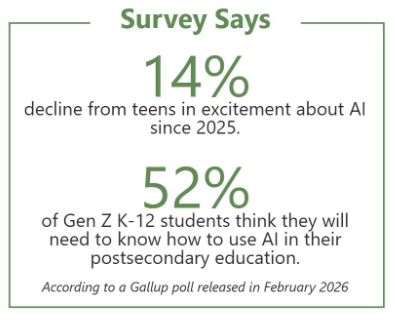
However, Rubelmann is frustrated by the rise of a new, popular contributor to the art scene: Artificial Intelligence. A survey by Pew Research from Feb. 2026 found that 47% of teens have used AI for fun or entertainment, and 38% use it to generate images or videos.
“AI doesn’t have a place in art because people are trying to use it as a replacement and not as a genuine tool,” Rubelmann said. “It’s just not a finished product.”
Rubelmann has found AI-generated content online, but he has also started noticing AI generated flyers within the MHS halls and Library.
“[It’s] really deeply saddening because there is a large art community here,” Rubelmann said. “No artist is excited when they come up with a new way to replace a creative.”
AI in the Library
Initially, the Library started using AI as a tool after the district offered more AI resources, like technologies and training from the technology department and increased access to AI platforms, Brittany Sharitz, librarian, said.
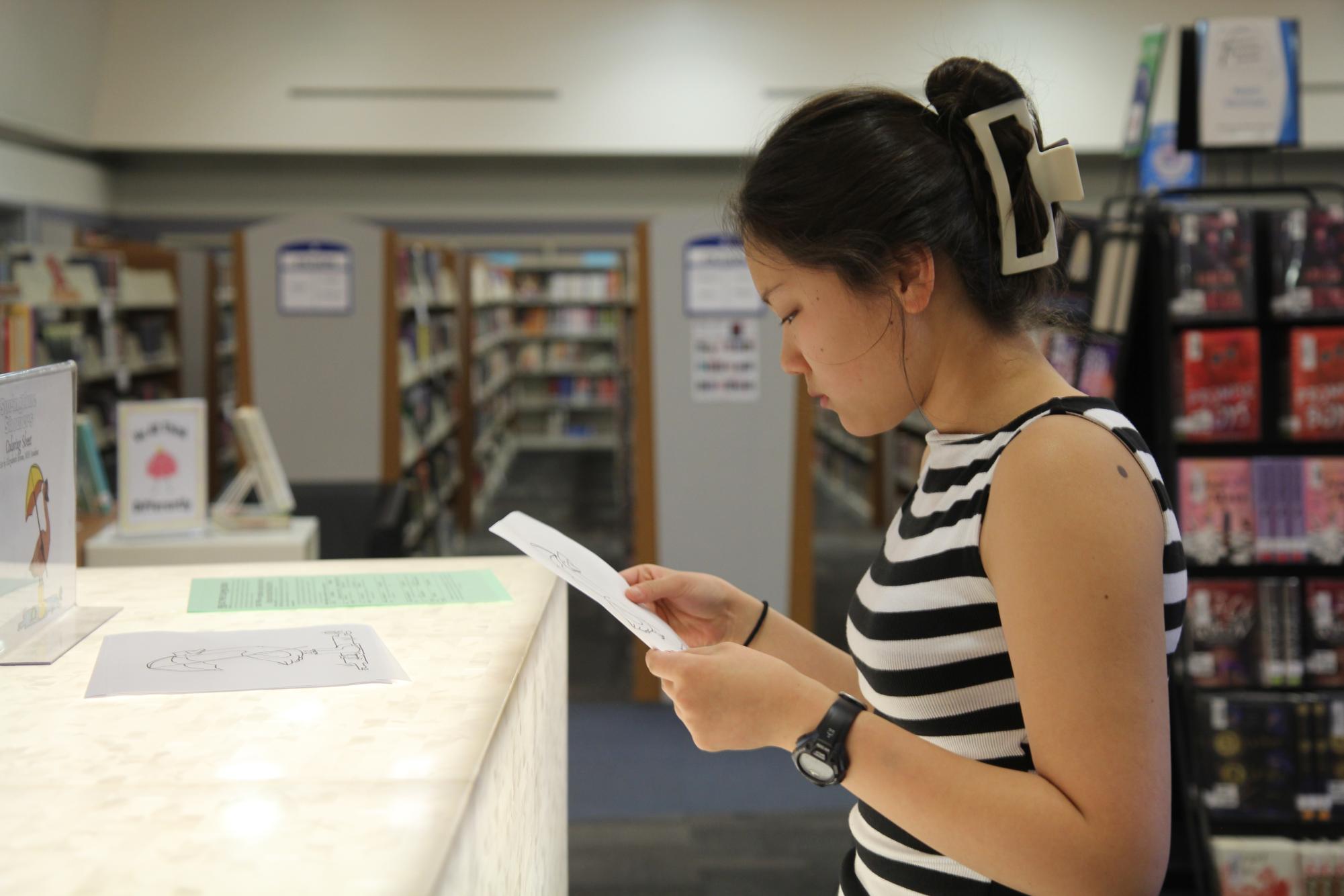
Sharitz said she has used AI to create certain activities, reading trackers and coloring sheets, because she doesn’t feel like she is a fully creative person.
“I don’t often use AI for my own thinking, but in places that I do feel like I have limitations, like in creative aspects, I was more inclined to use it to create something original,” Sharitz said.
After some AI-generated materials were used in the library, Sharitz said she received a lot of student feedback through a survey sent out to students. AI wasn’t a specific question, however one of the open-ended questions drew student responses.
“We have some students who just really do not like the use of AI within the library, which is a place that takes pride in promoting creativity and intelligence,” Sharitz said.
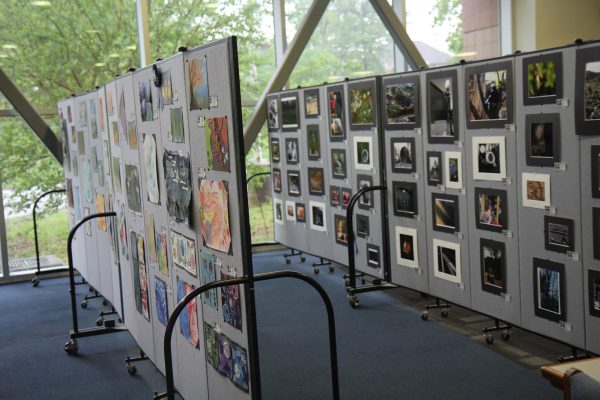
Now, Sharitz said the library works to include student artists when they need items like graphics, posters or coloring sheets for library events. Another goal is to feature student work, such as materials from art or Project Lead the Way (PLTW) classes.
“The true goal of a library is for everyone to feel seen and welcome,” Sharitz said. “So if our artistic students weren’t feeling that way because we were using AI, we don’t want to keep using it.”
Education
Sharitz said that the use of AI in education is evolving quickly. Many libraries and classes in middle schools have fully embraced AI, something Sharitz said she and Holmes have been addressing by communicating that not all students want AI used everywhere.
“We’re kind of fighting this interesting battle,” Sharitz said.
Initially, Sharitz often encouraged not using AI for creative human work, but used it herself for smaller tasks. Now, her perspective has changed.
“I guess I was giving myself a pass originally as an educator to kind of use it for these small things, but the students helped me realize that even the small stuff counts,” Sharitz said.
Chief Information Officer Bob Deneau said the current district AI policy is woven within existing curriculum and academic integrity policies as a tool to assist students and staff, when used correctly.
During a two week period in March, Deneau conducted a study of 40 top users of AI among Rockwood high schoolers in order to gain a broader understanding of how AI is being used and misused. Deneau used Google Vault, which tracks student use of Google products including Google Gemini.
“If a student is using AI to enhance their learning, then they are using it as an effective tool,” Deneau said. “If a student is using AI as allowed by their teacher, then they are using it as an effective tool.”
Deneau said ensuring AI is being used only as a tool will allow student creativity and innovation to remain present within student ideas and work.
Rockwood AI Policy
Although the district has received feedback from principals and teachers, Deneau said gaining student and parent feedback is an area where he believes the district can improve.
“From students, I know AI has been a topic of discussion with several student advisory groups, but we need to do more to get more student voices into these discussions,” Deneau said. “For parents, we have not done any formal feedback but have gained parent perspectives from various conversations.”
Bianca Craig, junior, said Rockwood should pull back on AI usage and promotion.
“It really discourages people from thinking for themselves,” Craig said. “Instead of having to care about an assignment or project they’re just like ‘oh, I’ll ask AI.’ It’s become a crutch rather than a tool.”
Craig said she understands the district’s perspective to promote AI usage in what may be considered a responsible way, but students tend to misuse it anyways.
“I think rather than encouraging that, we should be providing resources that make people’s work easier without having to rely on AI,” Craig said.